


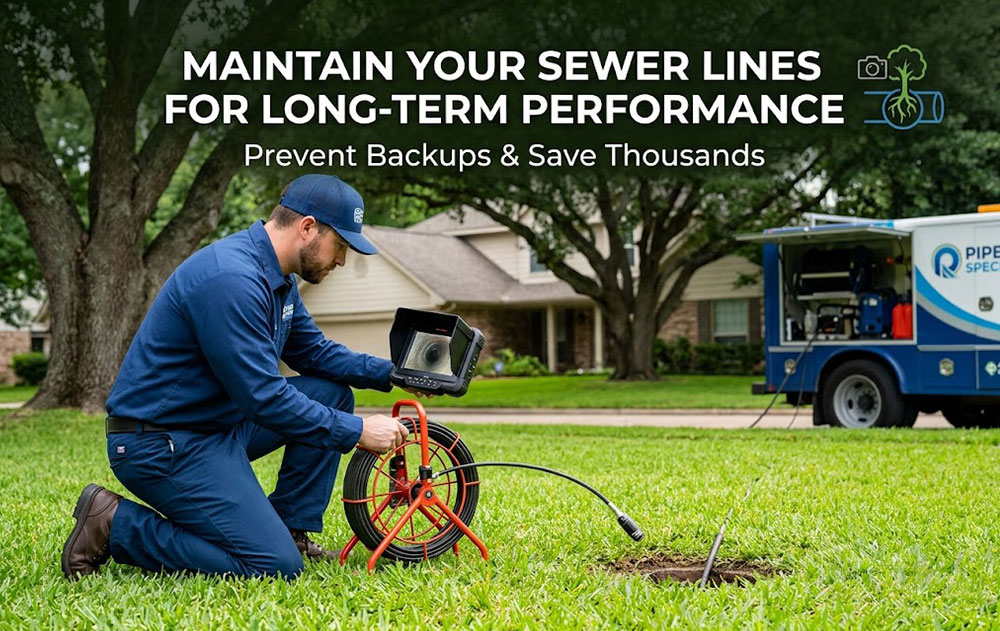
17 Mar Maintain Your Sewer Lines for Long-Term Performance
A healthy plumbing system runs quietly in the background. You turn on the faucet, take a shower, or run the dishwasher, and the wastewater disappears without a second thought. But when your main sewer line develops a problem, that quiet convenience turns into a stressful, messy, and expensive emergency.
Taking care of your underground pipes prevents unexpected backups and extends the lifespan of your entire plumbing network. Many homeowners wait until raw sewage backs up into their bathtubs before calling a professional. By adopting a few proactive habits, you can save thousands of dollars and keep your home safe from water damage.
This guide covers the most effective strategies for keeping your pipes flowing smoothly. We will explore daily habits that protect your plumbing, highlight the warning signs of impending blockages, and explain how advanced technology can restore damaged pipes without destroying your landscaping.
Recognize the Early Warning Signs of Sewer Trouble
Sewer lines rarely fail overnight. They usually give you subtle clues that a blockage or leak is forming. Catching these warning signs early allows you to address the problem before it requires extensive sewer repair.
Multiple Slow Drains
A single slow drain usually means you have a localized clog in one sink or shower. If every drain in your house is emptying slowly, the problem lies deeper within your main sewer line. Gurgling noises coming from your toilet when you run the bathroom sink are another strong indicator of a venting issue or a mainline blockage.
Unpleasant Yard Odors
Your sewer system is designed to be airtight. You should never smell raw sewage in your home or around your property. If a foul odor lingers near your foundation or in your backyard, you likely have a cracked pipe leaking wastewater into the surrounding soil.
Unusually Lush Grass
Wastewater acts as a highly effective fertilizer. If you notice a specific patch of grass in your yard that is noticeably greener, taller, or softer than the rest of your lawn, a broken underground pipe might be feeding it. While the green grass looks nice, the underlying issue can quickly undermine your property’s foundation.
Daily Habits to Protect Your Pipes
The easiest way to maintain your sewer lines is to control what goes down your drains. Your pipes are only designed to handle water, human waste, and toilet paper.
Keep Grease Out of the Sink
Cooking oil, bacon grease, and fat are the biggest enemies of a healthy sewer line. When you pour warm grease down the kitchen sink, it eventually cools and solidifies inside your pipes. Over time, this sticky residue traps food particles and hair, creating massive blockages known as “fatbergs.” Always pour excess grease into a disposable container and throw it in the trash.
Be Mindful of Flushing Habits
Flushable wipes are a leading cause of sewer backups. Despite what the packaging claims, these heavy wipes do not disintegrate like standard toilet paper. They easily snag on minor pipe imperfections and build up rapidly. Stick to flushing only human waste and toilet paper to keep your lines clear.
Manage Your Landscaping Carefully
Tree roots naturally seek out sources of water and oxygen. The warm, nutrient-rich environment of a sewer pipe is incredibly attractive to them. Tiny roots can force their way through microscopic cracks in older pipes, eventually expanding and crushing the line. Know exactly where your main sewer line runs, and avoid planting large trees or deep-rooted shrubs near that area.
The Value of a Sewer Video Camera Inspection
Guesswork has no place in modern plumbing. In the past, plumbers had to dig up large sections of a yard just to locate a broken pipe. Today, proactive maintenance involves a Sewer Video Camera Inspection.
During this process, a technician feeds a high-definition, waterproof camera attached to a flexible cable deep into your plumbing system. This provides a crystal-clear look at the interior walls of your pipes. A camera inspection can identify root intrusions, belly formations, grease buildup, and hairline cracks.
Scheduling an inspection every few years—or immediately after buying an older home—gives you a precise understanding of your system’s health. It allows you to target minor issues before they escalate into complete pipe failures.
Advanced Solutions: When Maintenance Isn’t Enough
Even with perfect maintenance, older pipes eventually deteriorate due to age, shifting soil, or severe root damage. When that happens, you do not have to resort to tearing up your driveway or destroying your carefully manicured lawn. Pipe Rehab Specialists provides modern alternatives to traditional excavation.
The Benefits of Trenchless Sewer Repair
If your pipes are cracked or heavily corroded, trenchless sewer repair offers a fast, minimally invasive solution. Instead of digging a massive trench across your property, technicians only need one or two small access points to complete the job. This method preserves your landscaping, saves time, and significantly reduces the overall cost of the project.
CIPP and Sewer Pipe Lining
One of the most effective methods of no-dig sewer repair is Cured-In-Place Pipe (CIPP) technology. Also known as sewer pipe lining, this process involves inserting a flexible, resin-saturated liner directly into the damaged pipe.
Once the liner is in place, it is inflated to press firmly against the inside walls of the old pipe. The resin then cures and hardens, creating a brand-new, structurally sound pipe within the old one. The resulting inner pipe is incredibly durable, resistant to root intrusion, and restores normal flow capacity.
Frequently Asked Questions About Sewer Maintenance
How often should I have my main sewer line cleaned?
For most households, scheduling a professional hydro-jetting or snaking every 18 to 22 months is sufficient to clear out accumulated grease, soap scum, and minor root growth. Homes with older clay pipes or a high volume of surrounding trees may require annual cleaning.
Can chemical drain cleaners damage my sewer line?
Yes. Harsh chemical drain cleaners rely on corrosive reactions to eat through clogs. These chemicals generate intense heat that can warp PVC pipes and corrode older metal lines. Plungers, mechanical augers, and professional hydro-jetting are much safer alternatives.
Does homeowners insurance cover sewer line replacement?
Standard homeowners insurance policies typically do not cover wear-and-tear damage to a sewer line, especially the portion that runs outside the foundation to the municipal connection. You usually need to purchase a specific water backup or service line endorsement to secure coverage.
Protect Your Plumbing System Today
Maintaining your sewer lines requires a combination of smart daily habits and professional oversight. By keeping grease and heavy paper products out of your drains, monitoring your yard for signs of leakage, and utilizing routine camera inspections, you can keep your plumbing system in excellent condition for decades.
If you suspect an issue with your underground pipes, do not wait for a catastrophic backup. The team at Pipe Rehab Specialists operates across Utah, Nevada, Idaho, Arizona, California, Wyoming, Oregon, and Colorado. We leverage advanced technology to deliver durable results without destroying your yard.
Ready to restore your pipes? Contact us today to schedule an inspection or get a quote for fast, reliable service.
No Comments