


28 Apr The Environmental Benefits of Trenchless Sewer Repair
Most property owners dread the discovery of a damaged sewer line. For decades, the standard fix involved bringing in heavy machinery, tearing up the yard, and excavating deep trenches. Beyond the massive headache and steep costs, this old-school method takes a surprisingly heavy toll on the local environment.
Fortunately, modern plumbing technology offers a much greener alternative. Trenchless sewer repair fixes damaged pipes from the inside out, bypassing the need for destructive digging. This innovative approach saves your landscaping while simultaneously protecting the planet. By minimizing ecological disruption and reducing waste, no-dig methods have become the preferred choice for eco-conscious homeowners.
The Ecological Cost of Traditional Excavation
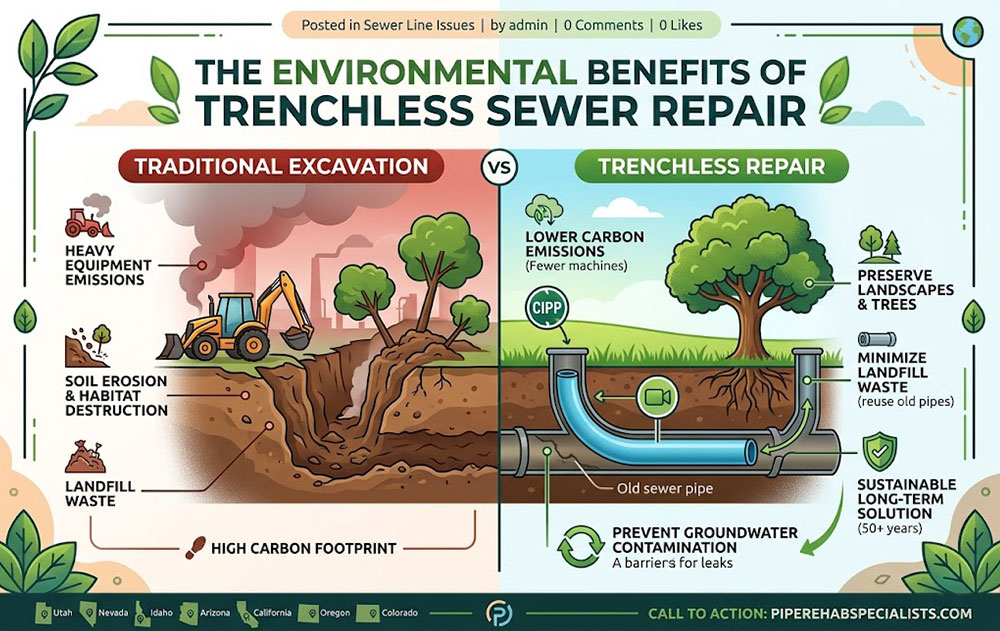
Traditional excavation requires heavy construction equipment like backhoes that consume massive amounts of diesel fuel, releasing significant greenhouse gas emissions. Furthermore, excavation physically destroys the immediate ecosystem—uprooting native plants and damaging the root systems of mature trees. This soil disruption can also lead to severe erosion and harmful runoff into local waterways.
Top Environmental Benefits of No-Dig Sewer Repair
By eliminating the need to excavate, no-dig sewer repair provides a highly sustainable alternative to total pipe extraction. Here is how this technology protects our ecosystems:
- Drastic Reduction in Carbon Emissions: Because trenchless methods require very little digging, there is no need for fuel-guzzling machinery to run on your property for days. This drastically lowers the overall carbon footprint of your plumbing project.
- Preserving Landscapes and Soil Integrity: Your yard is a living ecosystem. Trenchless repair leaves your gardens, lawns, and ancient tree roots untouched, preserving the natural habitat of beneficial soil microorganisms.
- Minimizing Landfill Waste: Traditional replacement involves hauling away tons of broken pipes and contaminated soil to landfills. CIPP (Cured-In-Place Pipe) repurposes the existing infrastructure, creating a new pipe directly inside the old one.
- Preventing Groundwater Contamination: Cracked lines allow raw sewage to seep into the soil. High-quality sewer pipe lining creates a seamless, joint-free barrier that stops active leaks and prevents future pathogens from reaching local groundwater.
The Power of Sewer Video Camera Inspection
A major component of eco-friendly maintenance is accuracy. In the past, plumbers had to guess where a break was located. Today, a professional Sewer Video Camera Inspection changes the game. By pinpointing the exact location of damage, professionals can perform a targeted spot repair rather than overhauling the entire system. Doing more with less is a core principle of environmental sustainability.
Why CIPP and Pipe Lining Are Built to Last
Sustainability is also about longevity. Once the epoxy resin cures, the newly formed structural pipe is highly resistant to corrosion and invasive tree roots. Because sewer pipe lining has an estimated lifespan of 50 years or more, you reduce environmental strain by avoiding frequent repairs over the long term.
Protect Your Property and the Planet
Choosing a trenchless solution means you get a faster, cleaner repair while actively reducing your environmental impact. At Pipe Rehab Specialists, we are proud to offer state-of-the-art, low-cost sewer repair across Utah, Nevada, Idaho, Arizona, California, Wyoming, Oregon, and Colorado.
Ready to fix your plumbing issues the eco-friendly way? Contact us today to get a quote and learn more about our advanced pipe restoration services.
No Comments