


05 May Why Choose Trenchless Tech Over Traditional Digging?
A damaged sewer line is one of the most stressful problems a property owner can face. Suddenly, you are dealing with slow drains, foul odors, and the looming threat of a complete plumbing backup. In the past, fixing this issue meant bringing in heavy machinery to tear up your pristine lawn, driveway, and landscaping to reach the broken pipe.
Fortunately, modern plumbing has evolved. Homeowners and businesses now have access to a far superior alternative that eliminates the destruction and hassle of the old methods. This innovative approach is known as trenchless technology, and it is rapidly becoming the industry standard for pipe rehabilitation.
If you are facing a plumbing crisis, you might be wondering how this modern method compares to the old-school approach. Understanding the stark differences between tearing up your yard and using advanced internal repair techniques can save you significant time, money, and stress.
This comprehensive guide explains the mechanics of trenchless sewer repair, highlights the massive benefits of going trenchless, and breaks down exactly why you should choose this modern solution over traditional digging.
What is Trenchless Sewer Repair?
Trenchless sewer repair is exactly what it sounds like: a method of fixing or replacing damaged underground pipes without digging a massive trench. Instead of excavating your entire yard to expose the faulty line, specialized technicians use existing access points to enter the plumbing system.
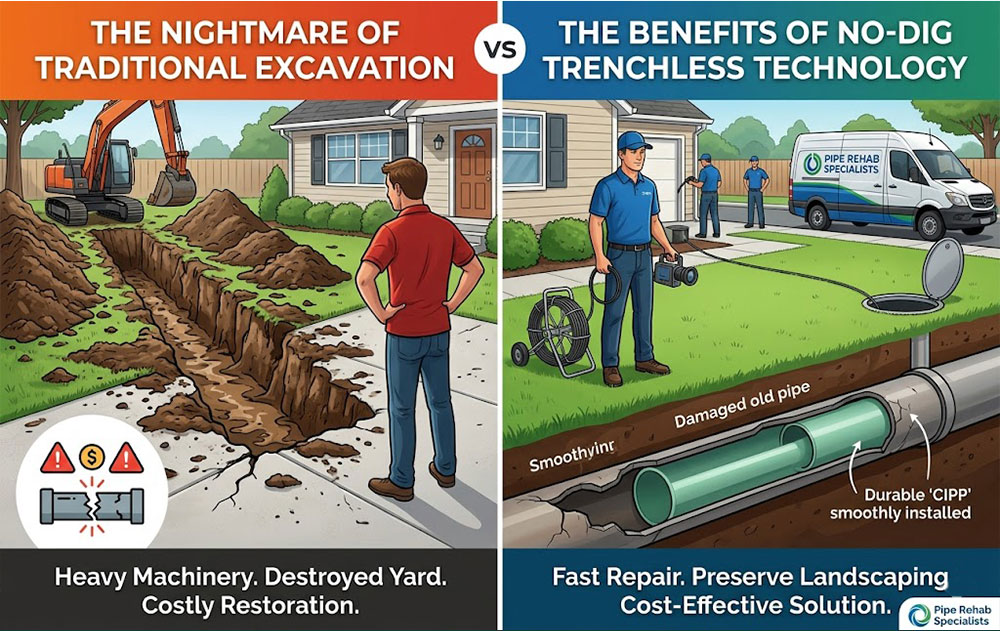
Once inside, professionals use advanced methods like CIPP (Cured-In-Place Pipe) to restore the line from within. Essentially, they create a brand new pipe inside the old, damaged one. This no-dig sewer repair completely seals cracks, smooths out rough edges, and restores the structural integrity of your plumbing system without moving a single pile of dirt.
The Nightmare of Traditional Excavation
To truly appreciate the value of trenchless technology, you have to understand the reality of traditional sewer repair. The conventional method requires heavy equipment, such as backhoes and excavators, to dig a trench along the entire length of the damaged pipe.
This process is highly destructive. If your sewer line runs under your driveway, the concrete must be demolished. If it runs under your favorite garden bed, those plants will be uprooted. Furthermore, the quoted price for traditional excavation rarely includes the cost of remediation. After the plumbers leave, you are still responsible for hiring landscapers and paving contractors to put your property back together.
Top Benefits of No-Dig Sewer Repair
Switching to a trenchless approach offers massive advantages for both residential and commercial property owners. Here is why the modern method wins every time.
Preserves Your Landscaping and Property
The most obvious benefit of trenchless technology is the preservation of your property. Because technicians only need small access points, your driveway, patio, and carefully curated landscaping remain completely intact.
Significantly Faster Turnaround Times
Time is a critical factor when dealing with a broken sewer line. Traditional repairs can leave you without functioning plumbing for a week. In contrast, a trenchless sewer repair can often be completed in just a single day.
Long-Lasting Results with CIPP
You might worry that a no-dig solution is just a temporary patch. In reality, sewer pipe lining is incredibly durable. The CIPP method uses a flexible liner coated with a specialized epoxy resin that is designed to last for decades.
A Cost-Effective Solution
While the upfront materials can sometimes cost more, the overall project cost is almost always lower because you eliminate the thousands of dollars you would otherwise spend on property restoration.
How the Trenchless Process Works
At Pipe Rehab Specialists, we follow a strict protocol to ensure your pipes are restored perfectly.
Step 1: Sewer Video Camera Inspection
The process begins with a comprehensive inspection. We feed a high-definition, waterproof camera into your lines to pinpoint exact locations of cracks or blockages.
Step 2: Hydro Jetting and Pipe Cleaning
We use high-pressure hydro jetting equipment to scour the inside of the pipe, removing grease, tree roots, and scale to ensure the epoxy adheres correctly.
Step 3: Sewer Pipe Lining Application
The flexible CIPP liner is saturated with epoxy resin and inserted into the pipe, then expanded to press tightly against the interior walls of the old pipe.
Step 4: Curing and Final Inspection
After the resin hardens into a rock-solid new pipe, we perform one final video inspection to verify that the repair is structurally sound.
Frequently Asked Questions
Is trenchless repair safe for older homes?
Yes. It is often preferred for older homes as it avoids disrupting fragile foundations and historic landscaping.
Can all damaged pipes be fixed with no-dig technology?
While versatile, pipes that have completely collapsed may still require traditional excavation. A camera inspection will determine the best fit.
How long does the new pipe liner last?
A properly installed sewer pipe liner will easily last 50 years or more.
Ready to Fix Your Pipes Without the Mess?
Do not let a plumbing emergency ruin your property. At Pipe Rehab Specialists, we proudly provide low-cost, high-quality pipe restoration across Utah, Nevada, Idaho, Arizona, California, Wyoming, Oregon, and Colorado.
Contact us today to get a quote and discover how our advanced pipe lining services can save your yard and your budget.
No Comments