


17 Feb The Science Behind Structural Pipe Lining
Dealing with a broken sewer line used to mean one thing: destroying your yard. Property owners would dread the heavy machinery, the deep trenches, and the hefty restoration bills that followed a traditional plumbing fix. Plumbers had to excavate the entire length of the damaged pipe, leading to days of disruption and a landscape left in ruins.
Fortunately, modern plumbing technology has completely transformed how we handle underground infrastructure. Engineers and material scientists developed a highly effective alternative that repairs pipes from the inside out. This innovative approach relies on advanced chemistry and fluid dynamics to restore your plumbing system without moving a single shovel of dirt.
So, how exactly does this modern marvel work? The secret lies in structural pipe lining. By understanding the science behind this process, property owners can make informed decisions about maintaining their plumbing systems. Let us explore the mechanics, materials, and methods that make this trenchless solution so reliable.
What is Structural Pipe Lining?
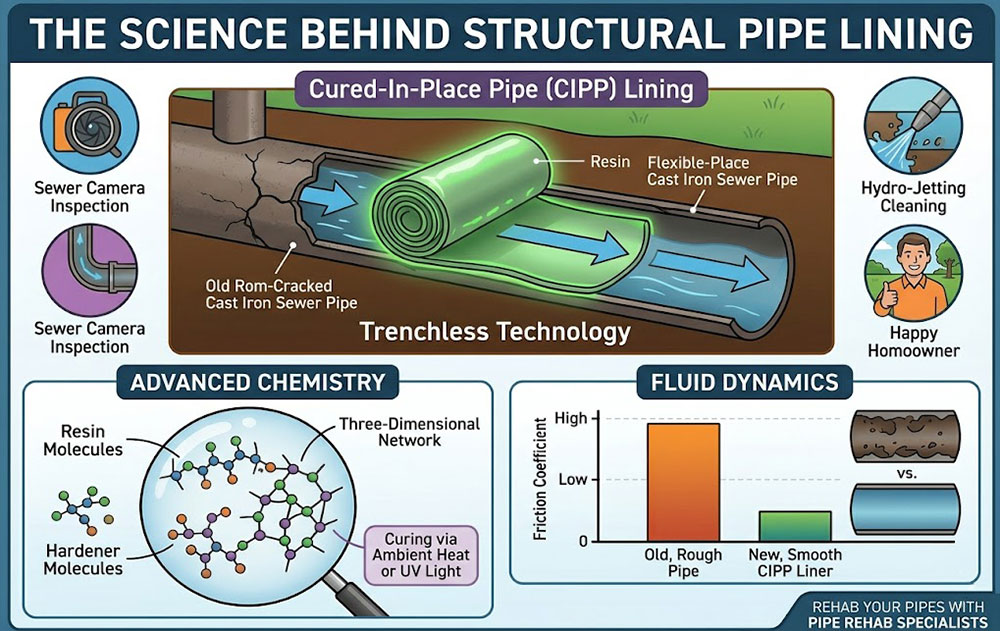
Structural pipe lining is a method of repairing cracked, leaking, or damaged pipes by creating a new pipe directly inside the old one. Professionals often refer to this process as Cured-In-Place Pipe (CIPP) lining. It is a cornerstone of trenchless sewer repair, offering a seamless, durable fix that significantly extends the lifespan of your plumbing.
Instead of digging up the damaged section, technicians insert a flexible liner coated with a specialized resin into the existing pipeline. Once positioned correctly, the liner expands and the resin cures, hardening into a structurally sound, standalone pipe. This no-dig sewer repair method effectively seals cracks, bridges gaps, and prevents future root intrusion.
The Chemistry of CIPP Resins
The success of CIPP heavily depends on the chemical properties of the resins used. Plumbers typically utilize epoxy, polyester, or vinyl ester resins, each chosen based on the specific requirements of the sewer repair project.
Epoxy Resins
Epoxy is the most common choice for residential sewer pipe lining. It consists of two components: a resin and a hardener. When these two parts mix, a chemical reaction called polymerization occurs. The molecules link together to form a rigid, three-dimensional network. This cross-linking process gives the cured epoxy its incredible strength and resistance to corrosive chemicals naturally found in wastewater.
Curing Mechanisms
The curing process requires a catalyst to initiate the hardening. Depending on the environment, technicians might use ambient heat, hot water, steam, or even ultraviolet (UV) light to speed up the reaction. Heat accelerates the molecular movement, allowing the cross-linking to happen quickly and uniformly. Once fully cured, the new liner is often stronger than the original PVC or cast iron pipe.
The Physics of Flow and Friction
One might assume that inserting a liner inside an existing pipe would reduce its diameter and restrict water flow. However, the physics of fluid dynamics actually works in favor of the newly lined pipe.
Traditional pipes, especially older cast iron or clay ones, degrade over time. Their interior walls become pitted, rough, and coated with scale. This roughness creates friction, which slows down the flow of water and waste. The new epoxy liner, by contrast, has an incredibly smooth surface. The coefficient of friction drops significantly, allowing water to flow much more efficiently, often improving the overall capacity of the sewer line.
The Step-by-Step Installation Process
The application of structural pipe lining requires precision, specialized equipment, and a thorough understanding of the pipe’s internal environment.
- Sewer Video Camera Inspection: Every successful rehabilitation starts with a comprehensive visual assessment. Technicians push a high-definition camera through the pipeline to reveal the exact location of cracks and blockages.
- Cleaning and Preparation: The resin needs a clean surface to bond properly. Plumbers use hydro-jetting machines or mechanical descaling tools to blast away roots, grease, and mineral buildup.
- Liner Inversion and Curing: The team saturates a felt or fiberglass liner with resin. Using specialized air or water pressure, they invert the liner into the pipe. Once in place, the curing process begins, resulting in a brand-new pipe within a pipe.
Frequently Asked Questions About Trenchless Technology
How long does structural pipe lining last?
When installed correctly, a CIPP liner can last for 50 years or more. The epoxy materials are highly resistant to the corrosion, rust, and root intrusion that typically destroy traditional pipes.
Can any pipe be lined?
Most pipes can benefit, including clay, cast iron, concrete, and PVC. However, if a pipe has completely collapsed, trenchless sewer repair might not be viable. A camera inspection is the only way to know for sure.
Is it really cheaper than traditional excavation?
Yes. While the materials are specialized, you save a tremendous amount of money by avoiding landscape restoration, concrete replacement, and extended labor hours.
Restore Your Pipes with Pipe Rehab Specialists
Structural pipe lining is more than just a convenient alternative to digging; it is a scientifically proven method for permanently restoring underground infrastructure. By leveraging advanced polymers and fluid dynamics, this technology provides a durable, efficient solution for property owners.
At Pipe Rehab Specialists, we utilize the latest CIPP technology to deliver fast and reliable results. If you are experiencing frequent backups or suspect a damaged sewer line, do not wait for a complete failure.
Contact us today to schedule a comprehensive inspection and get a quote. Let our experts provide a smart, no-dig solution that protects your property and your wallet.
No Comments