


28 Jan What Is Pipe Spot Repair and When Should You Use It?
There are few things more stressful for a homeowner than the looming threat of sewer line damage. We’ve all heard the horror stories: backhoes tearing up manicured lawns, driveways reduced to rubble, and repair bills that rival the cost of a new car. For decades, fixing a damaged pipe meant destruction was part of the process. If a sewer line had an issue, digging it up was the only solution.
Fortunately, plumbing technology has advanced significantly. We now live in an era where massive excavation projects are often unnecessary. For many homeowners, the solution isn’t a total system overhaul but a targeted, precise fix known as pipe spot repair.
This method allows professionals to isolate and fix specific issues without disturbing the rest of your plumbing or your property. It is efficient, cost-effective, and surprisingly quick. But is it right for your specific situation? Understanding how this technology works and identifying the signs of localized pipe damage can save you time, money, and a significant amount of landscaping heartache.
Understanding Pipe Spot Repair
Pipe spot repair is exactly what it sounds like: a method for repairing a specific “spot” or section of a pipe rather than replacing the entire line. It falls under the umbrella of trenchless sewer repair, a category of plumbing solutions that avoids the need for digging large trenches.
Think of it like medical surgery. In the past, surgeons made large incisions to reach a small problem area. Today, they use laparoscopic techniques to work precisely where needed with minimal impact on the surrounding tissue. Pipe spot repair works on the same principle for your plumbing.
This process typically utilizes Cured-in-Place Pipe (CIPP) technology. A specialized liner saturated with resin is inserted into the existing pipe and positioned directly over the damaged area. Once in place, the resin is cured—usually via air pressure, steam, or UV light—creating a rock-hard, structural repair that seals cracks, bridges gaps, and restores the integrity of the pipe.
How the Process Works
The beauty of this no-dig sewer repair method lies in its simplicity and effectiveness. Here is a general breakdown of how a professional team executes a spot repair:
- Assessment: The process begins with a Sewer Video Camera Inspection. A high-definition camera is fed into the line to pinpoint the exact location and nature of the damage.
- Cleaning: The pipe must be clean for the resin to adhere properly. Hydro-jetting or mechanical cleaning tools remove debris, roots, and buildup.
- Measuring: Technicians measure the exact distance to the damage to ensure the patch is placed perfectly.
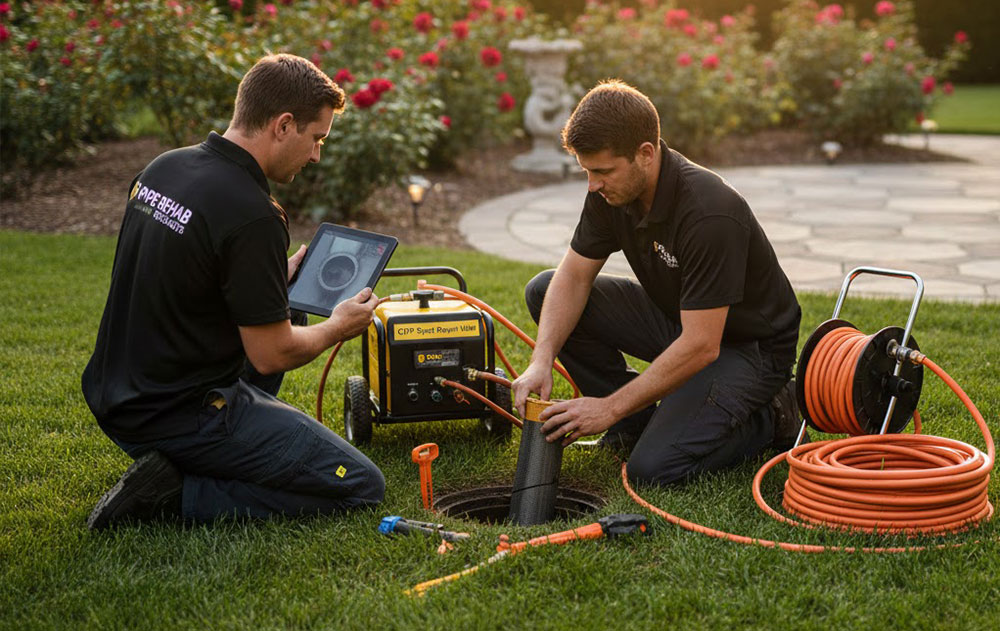
- Installation: The resin-soaked liner is wrapped around an inflatable bladder. This assembly is pushed or pulled into the pipe until it aligns with the damage.
- Curing: The bladder is inflated, pressing the liner against the inner walls of the pipe. It is held there until the resin cures and hardens.
- Final Inspection: The bladder is removed, and a final camera inspection confirms the repair is solid and flow is restored.
When Is Spot Repair the Right Choice?
Not every plumbing disaster requires a full sewer pipe lining of the entire system. Spot repair is ideal for isolated issues where the rest of the pipe remains in good condition. Here are the most common scenarios where this targeted approach is the best solution.
1. Isolated Cracks or Fractures
Pipes can crack due to shifting soil, freezing and thawing cycles, or general settling of the house. If the damage is limited to a single section—perhaps a two-foot span where the earth shifted—replacing the whole line is overkill. Spot repair seals the fracture instantly, preventing leakage and restoring structural strength to that specific area.
2. Root Intrusion at Joints
Tree roots are aggressive. They seek out moisture and nutrients, often finding their way into sewer lines through small gaps in the pipe joints. While cleaning the roots out offers a temporary fix, they will almost always grow back. A spot repair patch covers the joint completely, creating a seamless barrier that roots cannot penetrate.
3. Corrosion in Specific Areas
Cast iron pipes are durable, but they are prone to corrosion over time. Sometimes, this corrosion is localized, creating a rough bottom or a hole in one specific section. If the rest of the pipe has years of life left, patching the corroded section is a smart, economical way to extend the lifespan of your plumbing system.
4. Fixing Previous Faulty Repairs
Sometimes, previous plumbing work fails. Poorly installed connections or older patches that weren’t done correctly can cause flow issues. Spot repair can often bridge these gaps and smooth out the transitions, correcting the errors of the past without digging up the yard.
The Benefits of Choosing Trenchless Spot Repair
Why should a homeowner choose spot repair over traditional excavation or full lining? The advantages are clear, especially when minimizing disruption is a priority.
Cost-Effectiveness
Excavation is expensive. You aren’t just paying for the plumbing work; you are paying for the heavy machinery, the labor to dig, and the subsequent costs to repair your landscaping, driveway, or patio. By avoiding the dig, you eliminate a massive chunk of the project cost. Furthermore, because spot repair uses less material than lining an entire lateral, the material costs are also lower.
Speed and Efficiency
Traditional sewer repair can take days. There is the digging, the pipe replacement, the inspection, and the backfilling. Spot repair is typically a same-day service. In many cases, the repair is completed in just a few hours, meaning your water is back on and your life returns to normal before dinner time.
Preserving Your Landscape
If your sewer line runs under a prize-winning rose garden, a customized paver driveway, or a beautiful old oak tree, the last thing you want is a trench cut through it. No-dig sewer repair accesses the pipe through existing cleanouts or small access points, leaving your property virtually untouched.
Durability
Do not mistake “patch” for “temporary fix.” The materials used in CIPP spot repairs are industrial strength. Once cured, the patch is often stronger than the original pipe itself. These repairs are resistant to corrosion, rust, and root intrusion, and they typically come with warranties that last for decades.
Signs You Might Need a Spot Repair
How do you know if your sewer line is struggling? While a professional Sewer Video Camera Inspection is the only way to be sure, your home will often give you clues that something is wrong underground.
- Slow Drains: If sinks, bathtubs, or toilets are draining slower than usual, it indicates a blockage or a break in the line.
- Unpleasant Odors: A cracked sewer pipe can release sewer gas into your home or yard. If you catch whiffs of rotten eggs, you likely have a breach in the line.
- Lush Patches of Grass: Sewer water is a potent fertilizer. If you notice a random patch of grass that is greener and taller than the rest of the lawn, it might be feeding off a leaking pipe below.
- Pest Infestations: Rats and insects love sewer lines. A sudden increase in pests could indicate they are entering your home through a crack in the pipes.
- Indentations in the Lawn: If a pipe has collapsed or is leaking significant water, it can erode the soil around it, causing the ground above to dip or sink.
Comparing Spot Repair vs. Full Liner vs. Replacement
It is important to understand where spot repair fits in the hierarchy of sewer repair solutions.
Traditional Excavation is usually reserved for pipes that are completely collapsed or back-pitched (sloped the wrong way), where a liner physically cannot be inserted or wouldn’t solve the flow issue. It is the most invasive option.
Full Sewer Pipe Lining is used when a pipe is deteriorating throughout its entire length. If you have an old clay or cast iron pipe with cracks every few feet, spot repairing would be inefficient. In this case, lining the entire span creates a “pipe within a pipe” from start to finish.
Spot Repair is the middle ground. It is the surgical strike. It is for the homeowner who has a generally healthy plumbing system that has suffered one specific injury. It is the most logical choice when 90% of the pipe is fine, and only 10% is failing.
Why Professional Assessment Matters
While the concept of spot repair is straightforward, the execution requires expertise. Not every pipe is a candidate for this method. If a pipe has lost its structural integrity entirely or has collapsed, a liner cannot simply shape itself back into a circle. It requires an open channel to work.
This is why working with experienced technicians is non-negotiable. A qualified team will never guess; they will verify. Using advanced video diagnostics, they will show you exactly what the problem is and explain why a specific repair method is the best route. They will look at the age of the pipe, the material, the depth, and the extent of the damage before recommending a solution.
At Pipe Rehab Specialists, we serve homeowners across Utah, Nevada, Idaho, Arizona, California, Wyoming, Oregon, and Colorado. We specialize in diagnosing complex sewer issues and providing trenchless solutions that respect your property and your wallet.
Secure Your Home’s Plumbing Future
Ignoring sewer issues never makes them go away; it only makes them more expensive. Small cracks become large breaks, and minor root intrusion becomes a major blockage. If you suspect an issue with your sewer line, or if you simply want peace of mind regarding the state of your pipes, early detection is key.
Pipe spot repair offers a modern, durable, and minimally invasive solution to common sewer problems. It allows you to fix what is broken without fixing what isn’t. Don’t let the fear of excavation keep you from addressing necessary repairs.
If you are experiencing drainage issues or want to schedule an inspection to see if spot repair is right for you, we are here to help. Contact us today to discuss your options or get a quote for your project. Let’s get your plumbing flowing freely again.
No Comments